
Newsletter - October 2026
Season of Discovery: Udaipur Awaits
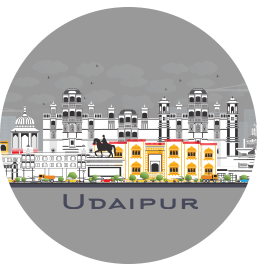
Experience the Magic of Udaipur, Rajasthan
Your Ultimate Guide to a Royal, Historical & Cultural Escape
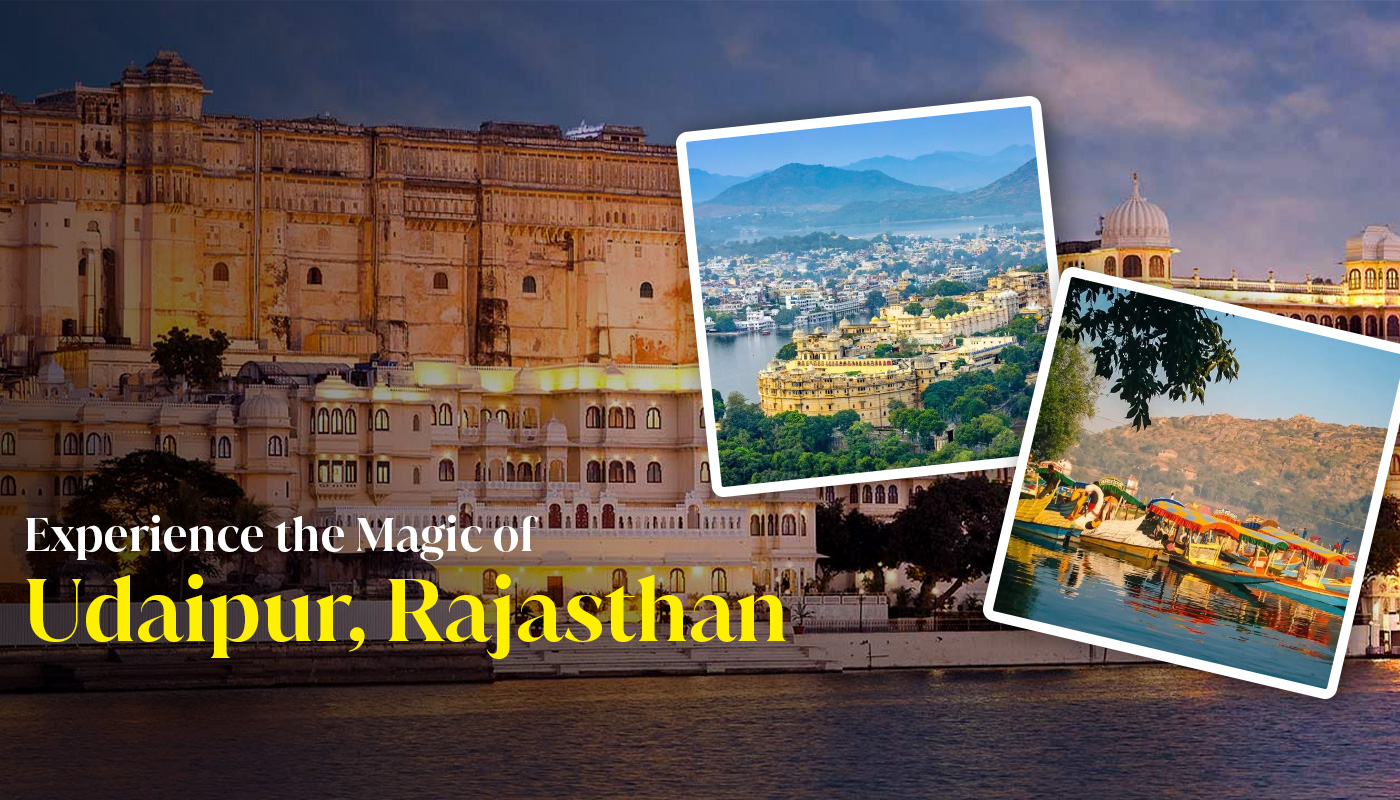
Udaipur is one of Rajasthan’s most enchanting destinations, known for its royal heritage, beautiful lakes, grand palaces, historic forts, vibrant culture, and romantic charm. Often called the “City of Lakes” and the “Venice of the East,” Udaipur offers a beautiful blend of history, architecture, nature, art, and traditional Rajasthani hospitality. Whether you are a history enthusiast, a culture lover, a couple, or a family traveller, Udaipur has something memorable for everyone.
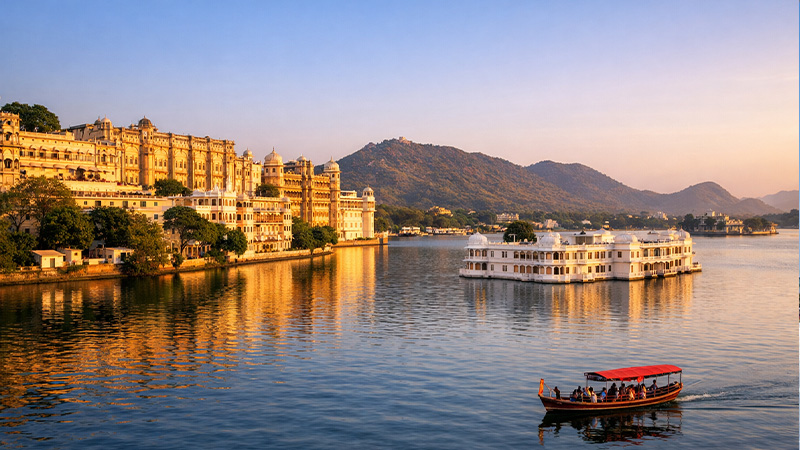
At the heart of the city stands the magnificent City Palace, one of Udaipur’s most iconic landmarks. Built over several centuries by the rulers of Mewar, this grand palace complex showcases beautiful courtyards, balconies, domes, royal chambers, museums, and intricate architecture. Overlooking Lake Pichola, the palace offers spectacular views of the city and surrounding Aravalli hills.
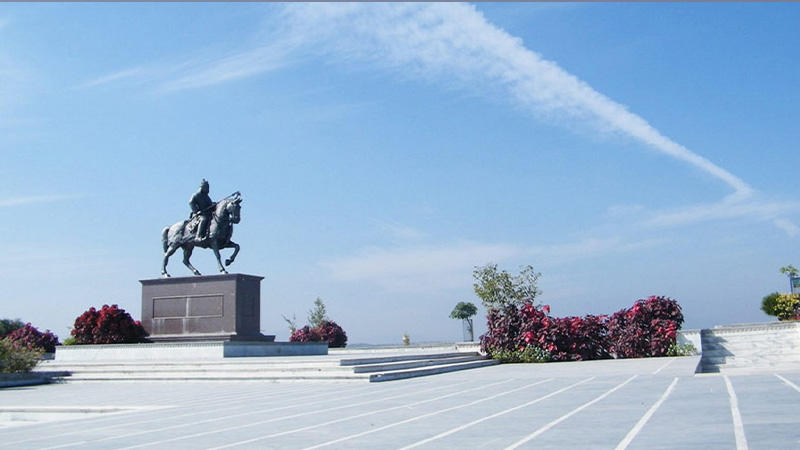
Udaipur’s history is deeply connected with the legendary Mewar dynasty and Maharana Pratap. The region played an important role in the history of Rajputana, with stories of courage, sacrifice, and resistance forming an important part of its identity. A visit to the Maharana Pratap Memorial at Moti Magri offers travellers a glimpse into the legacy of one of Rajasthan’s most celebrated warriors.
The city’s beautiful lakes are another defining feature of Udaipur. Lake Pichola, surrounded by palaces, temples, ghats, and heritage buildings, is especially famous for its scenic beauty. A boat ride across the lake offers stunning views of City Palace, Jag Mandir, Lake Palace, and the Aravalli hills, particularly around sunset.
Another architectural gem is Jag Mandir, a historic palace located on an island in Lake Pichola. Built by the Mewar rulers, the palace is known for its elegant marble architecture and picturesque setting. The island retreat also has historical connections with Prince Khurram, later Emperor Shah Jahan, adding another fascinating chapter to Udaipur’s royal history.
For travellers interested in spirituality and architecture, Jagdish Temple is a must-visit. This magnificent Hindu temple, built in the 17th century, is dedicated to Lord Vishnu and features impressive carvings and traditional Indo-Aryan architectural details.
Udaipur is also home to Saheliyon-ki-Bari, a beautiful historic garden created for the royal women of the Mewar court. With fountains, marble pavilions, lotus pools, and lush greenery, it offers a peaceful escape from the city’s busy streets.
For panoramic views of Udaipur, Sajjangarh Palace, also known as the Monsoon Palace, is a must-visit. Perched on a hilltop overlooking the city and its lakes, the palace was built by Maharana Sajjan Singh and is especially beautiful during sunset.
Udaipur’s rich heritage can also be experienced through its traditional art, music, dance, handicrafts, and local markets. Visitors can explore colourful bazaars filled with Rajasthani textiles, miniature paintings, traditional jewellery, handicrafts, leather juttis, puppets, and souvenirs.
No trip to Udaipur is complete without enjoying its delicious Rajasthani cuisine. From dal baati churma and gatte ki sabzi to ker sangri, laal maas, kachori, ghewar, and traditional sweets, the city offers plenty of opportunities to experience authentic flavours of Rajasthan.
Beyond its palaces and historical landmarks, Udaipur offers plenty of opportunities to relax and enjoy nature. The surrounding Aravalli hills, tranquil lakes, gardens, heritage properties, and scenic viewpoints create a peaceful atmosphere that makes the city especially appealing for couples, families, and leisure travellers.
Whether you’re planning a royal getaway, historical journey, romantic escape, family vacation, or cultural holiday, Udaipur promises an experience filled with majestic architecture, fascinating stories, scenic beauty, traditional flavours, and warm Rajasthani hospitality.
Udaipur is more than a destination—it is a journey through the royal legacy, timeless history, vibrant culture, and breathtaking beauty of Rajasthan.
Why October is a Great Time to Visit Udaipur
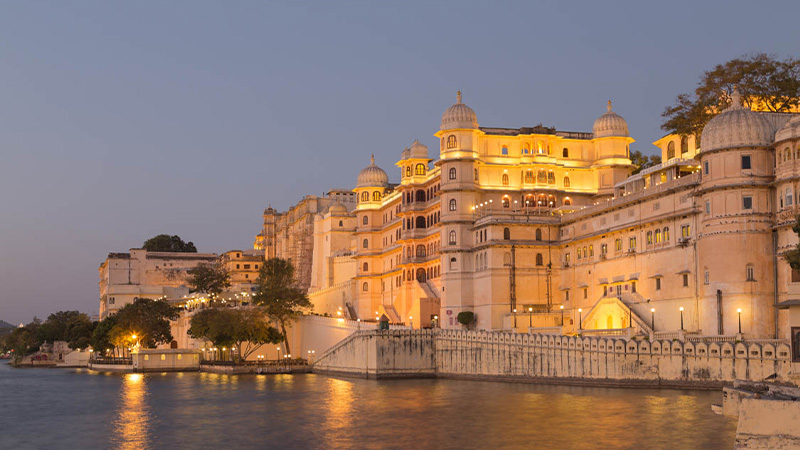
October marks the beginning of the more comfortable travel season in Udaipur. With the monsoon behind, rainfall decreases and temperatures start becoming more pleasant, making it easier to explore the city’s lakes, palaces, temples, forts, and heritage streets. Rajasthan generally sees temperatures around 13°C–30°C during October–December, although Udaipur itself can vary by day and time.
One of the biggest reasons to visit Udaipur is its remarkable royal history. The city was the historic capital of the Mewar kingdom and is closely associated with the Sisodia Rajput rulers. A visit to the magnificent City Palace offers a glimpse into this royal past through its courtyards, museums, balconies, royal rooms, and intricate architecture overlooking Lake Pichola.
October is also a good time to explore the legacy of Maharana Pratap, one of Mewar’s most celebrated rulers. At Moti Magri, visitors can see his impressive memorial and learn more about the history and warrior traditions of the Mewar region.
The city’s famous Lake Pichola becomes especially enjoyable to explore as the post-monsoon landscape remains fresh while the weather starts getting more comfortable. A boat ride offers beautiful views of the City Palace, Jag Mandir, Lake Palace, ghats, and the Aravalli hills.
Another important part of Udaipur’s heritage is Jagdish Temple, a historic 17th-century temple known for its detailed carvings and traditional architecture. The surrounding old-city lanes also give visitors a chance to experience the everyday character of historic Udaipur.
For panoramic views, Sajjangarh Palace, or the Monsoon Palace, is worth adding to an October itinerary. Located on a hilltop, it overlooks Udaipur’s lakes and the surrounding Aravalli landscape. The recently passed monsoon can also leave the surrounding hills looking greener than they do later in the dry season.
October is also a time when Navratri and Dussehra celebrations can bring festive energy to Rajasthan, depending on the year’s Hindu calendar. Across Rajasthan, these celebrations are associated with religious ceremonies, local gatherings, cultural performances, and festive markets. So, if your October visit coincides with these dates, you may experience a more colourful side of local life.
However, it is worth noting that Udaipur does not have its famous Mewar Festival in October. The Mewar Festival is associated with the arrival of spring and the Gangaur celebrations.
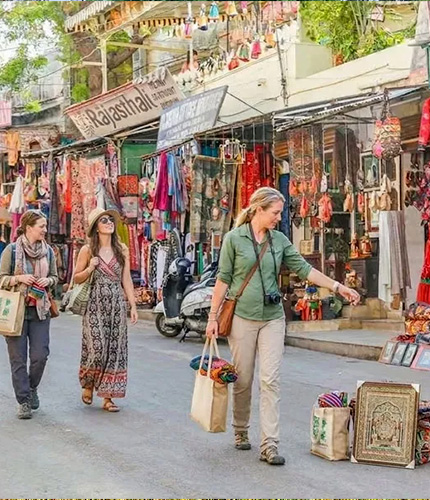
October is also a good time to explore Udaipur’s local markets and traditional crafts. From colourful textiles and Rajasthani handicrafts to miniature paintings, jewellery, puppets, and traditional footwear, the old markets offer plenty of opportunities to discover the artistic traditions of Mewar.
And of course, a Udaipur trip is incomplete without experiencing Rajasthani food. Visitors can enjoy dal baati churma, gatte ki sabzi, ker sangri, kachori, traditional sweets, and other local specialities while exploring the city’s restaurants and food streets.
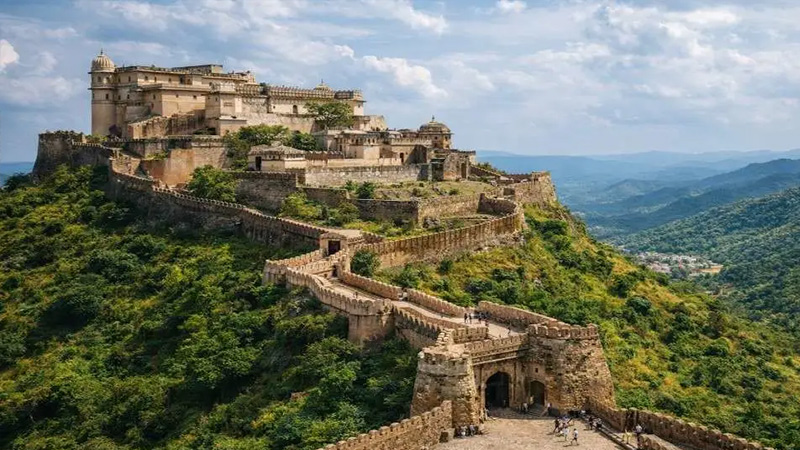
If you have extra time, October is also suitable for exploring destinations around Udaipur such as Kumbhalgarh and Ranakpur. Kumbhalgarh is particularly significant for its massive historic fort and its connection with Mewar’s history. The official Rajasthan Tourism calendar lists the Kumbhalgarh Festival later in the year, so it should not be presented as an October event.
Whether you’re planning a historical journey, royal getaway, romantic vacation, family holiday, or cultural escape, October offers a comfortable opportunity to experience Udaipur beyond just its famous photographs.
From the legacy of Mewar and Maharana Pratap to grand palaces, serene lakes, festive traditions, local crafts, and authentic Rajasthani flavours, October is a wonderful time to discover the many sides of Udaipur.
Must-Visit Attractions in Udaipur in October
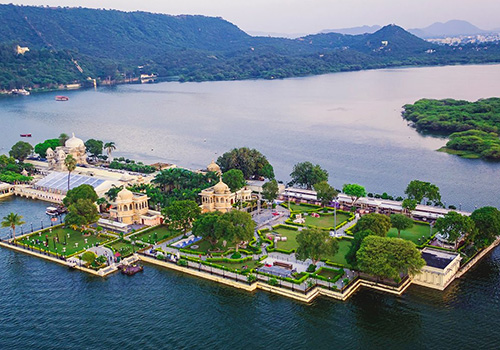
Lake Pichola
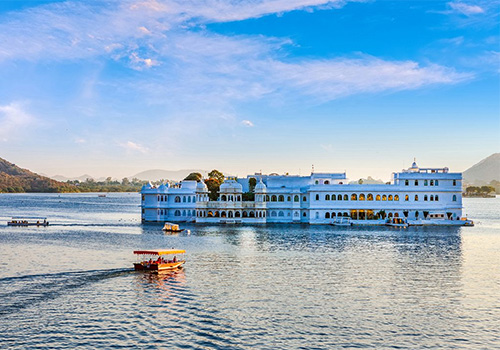
One of Udaipur’s most iconic attractions, Lake Pichola is surrounded by magnificent palaces, historic ghats, temples, and the Aravalli Hills. October is a great time to enjoy a boat ride as the monsoon season has recently passed and the weather becomes more comfortable for exploring the lake and its scenic surroundings.
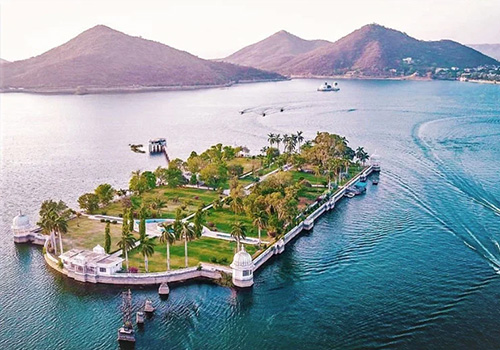
Jagmandir Island Palace
Located on an island in Lake Pichola, Jagmandir Island Palace is a stunning example of Udaipur’s royal heritage. Its beautiful marble architecture, grand courtyards, and peaceful setting make it a memorable place to visit. The palace also has historical connections with Prince Khurram, who later became Mughal Emperor Shah Jahan.
Fateh Sagar Lake
Fateh Sagar Lake is another beautiful destination known for its peaceful waters, surrounding hills, and scenic views. October offers a pleasant opportunity to enjoy the lake, take a boat ride, or simply relax by the waterfront while experiencing one of Udaipur’s most loved natural attractions.
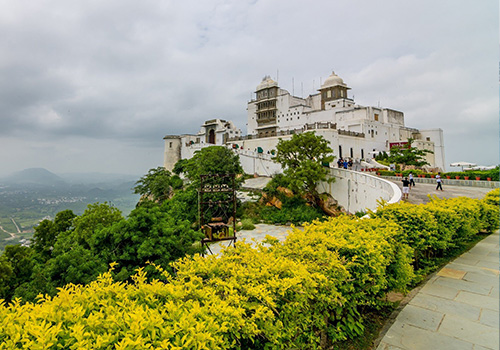
Sajjangarh Monsoon Palace
Perched on a hilltop overlooking Udaipur, Sajjangarh Monsoon Palace offers breathtaking views of the city, lakes, and Aravalli Hills. Built by Maharana Sajjan Singh, the palace has an important connection with Udaipur’s royal history. In October, the post-monsoon landscape around the palace can make the panoramic views particularly beautiful.
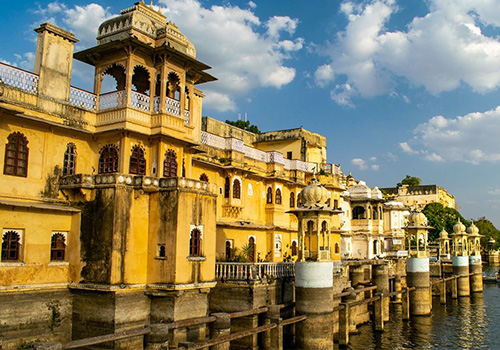
Bagore Ki Haveli
Located on the waterfront of Lake Pichola at Gangaur Ghat, Bagore Ki Haveli is a historic haveli that provides a glimpse into the lifestyle and culture of the Mewar era. Visitors can explore its royal rooms, traditional artefacts, costumes, and artwork. The evening cultural performances featuring Rajasthani folk music, dance, and puppetry make it an especially memorable experience.
A Taste of Udaipur
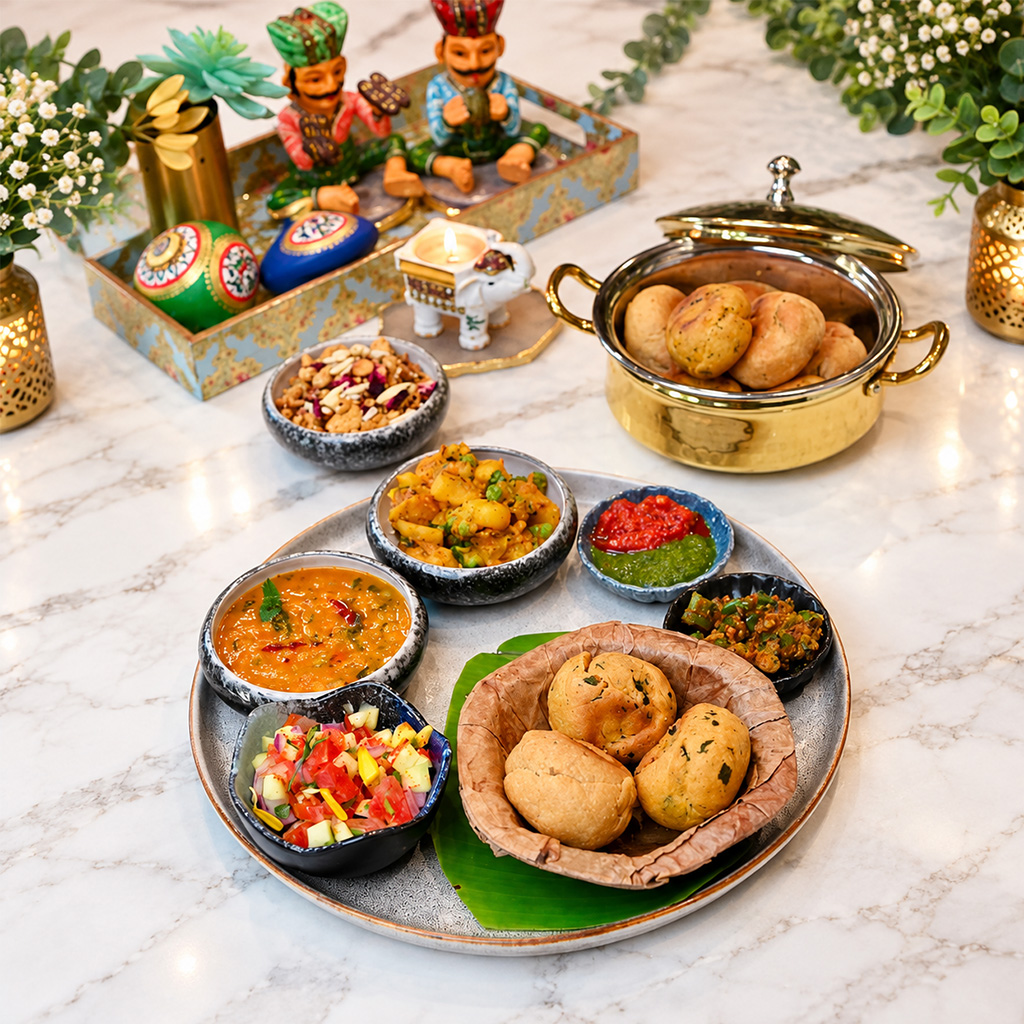
Dal Baati Churma
Udaipur is a wonderful destination for food lovers, offering the authentic flavours of Rajasthani cuisine through its local restaurants and heritage eateries. One must-try dish is Dal Baati Churma, a traditional meal featuring crisp, ghee-rich baati, flavourful dal, and sweet churma made with wheat, ghee and sugar or jaggery.
This delicious combination of savoury and sweet flavours reflects Rajasthan’s rich food culture. Whether exploring Udaipur’s palaces, streets or lakes, Dal Baati Churma is a must-try for an authentic taste of Rajasthan.
Celebrate the Spirit of October
Celebrate Gandhi Jayanti, Navratri, Dussehra & Karwa Chauth – A Season of Values, Devotion & Togetherness
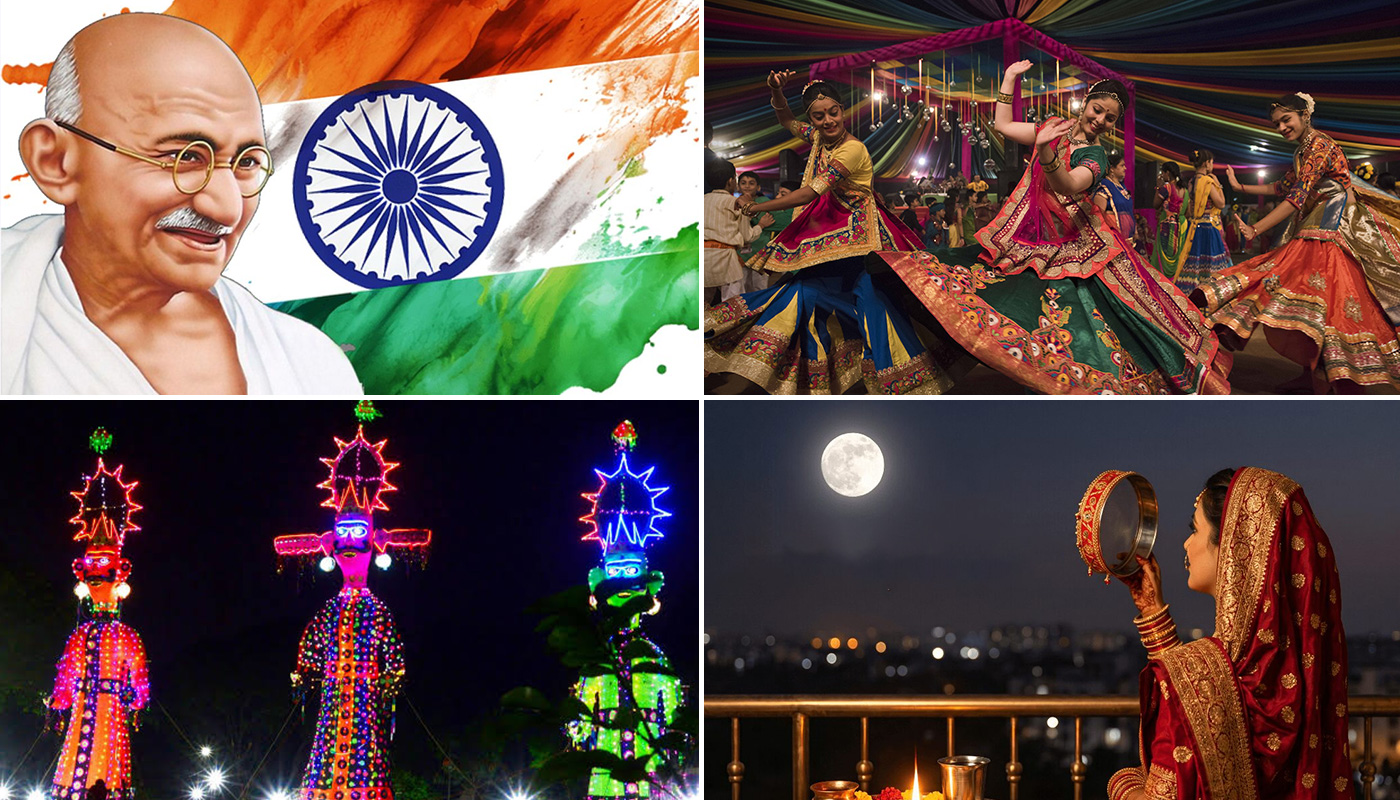
As the festive season unfolds, it brings meaningful occasions that celebrate peace, devotion, courage, tradition, and togetherness. Gandhi Jayanti, Navratri, Dussehra, and Karwa Chauth each hold a special place in our hearts, bringing people together through reflection, faith, cultural traditions, and celebration.
Gandhi Jayanti, celebrated on October 2, marks the birth anniversary of Mahatma Gandhi, one of India’s most influential leaders. The day reminds us of his principles of truth, non-violence, simplicity, and peace, inspiring us to follow these values in our everyday lives and contribute positively to society.
Navratri is a vibrant festival dedicated to the worship of Goddess Durga and her different forms. Celebrated over nine nights, the festival is marked by prayers, fasting, devotional rituals, traditional music, and colourful celebrations. It symbolises the victory of good over negativity and inspires strength, devotion, and positivity.
Dussehra celebrates the victory of good over evil and is associated with Lord Rama’s victory over Ravana. The festival reminds us that truth and righteousness ultimately triumph over injustice and wrongdoing. Across India, the occasion is celebrated through prayers, cultural programmes, and the traditional burning of Ravana effigies.
Karwa Chauth is a cherished festival that celebrates love, commitment, and marital togetherness. Married women traditionally observe a fast and offer prayers for the well-being and long life of their husbands. The day is filled with traditional rituals, beautiful attire, mehendi, family gatherings, and the evening moonrise ceremony.
Together, Gandhi Jayanti, Navratri, Dussehra, and Karwa Chauth create a beautiful season filled with values, devotion, courage, love, and cultural traditions. Each occasion carries its own message—from Gandhi’s principles of peace and truth to Navratri’s devotion, Dussehra’s triumph of good over evil, and Karwa Chauth’s celebration of love and togetherness.
This festive season is a beautiful reminder to live with truth, embrace faith, celebrate our traditions, cherish our relationships, and welcome every occasion with positivity, gratitude, and togetherness.
Cultural Escape – Vibrant Garba Nights, Timeless Traditions & Navratri Celebrations
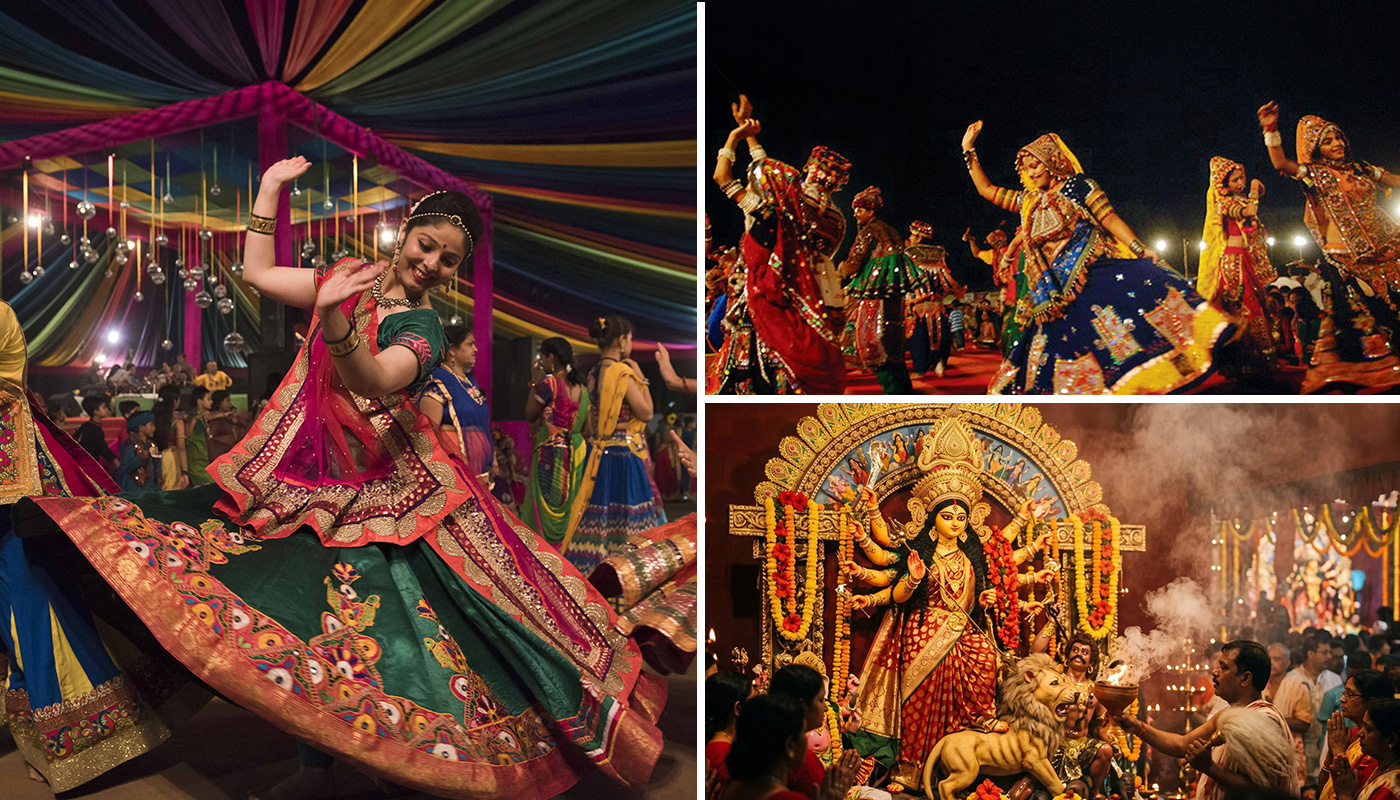
Experience the Spirit of Navratri in India
The Navratri Cultural Escape invites you to experience one of India’s most vibrant festivals through energetic Garba nights, devotional traditions, colourful celebrations, and the joyful spirit of togetherness. From beautifully decorated venues and traditional attire to rhythmic music and festive gatherings, Navratri offers a memorable glimpse into India’s rich cultural heritage.
One of the biggest highlights of Navratri is experiencing Garba and Dandiya nights. As the music fills the air, people come together in colourful traditional outfits to dance in circles around the beautifully decorated centrepiece. The rhythmic movements, lively beats, and energetic atmosphere make Garba one of the most exciting cultural experiences during the festival.
Navratri is deeply rooted in devotion and spirituality. The festival is dedicated to Goddess Durga and her nine forms, with devotees offering prayers and participating in religious rituals throughout the nine nights. Temples and homes are beautifully decorated, creating an atmosphere filled with faith, positivity, and devotion.
The festival also offers a wonderful opportunity to experience traditional Indian attire and crafts. Women often dress in vibrant Chaniya Cholis adorned with mirror work and embroidery, while men wear colourful Kediyu and traditional outfits. Local markets come alive with jewellery, handicrafts, accessories, and festive decorations.
Food is another important part of the Navratri experience. Depending on regional traditions and fasting practices, visitors can enjoy a variety of traditional festive dishes, snacks, sweets, and special vrat delicacies. From Sabudana preparations and Kuttu dishes to delicious sweets and regional specialities, Navratri brings a unique culinary experience.
Different parts of India celebrate Navratri in their own distinctive ways. Gujarat is renowned for its spectacular Garba and Dandiya celebrations, while West Bengal comes alive with grand Durga Puja festivities. In Karnataka, Mysuru is known for its magnificent Dussehra celebrations, while several regions across North India observe Navratri through prayers, fasting, and traditional rituals.
Beyond the dancing and celebrations, Navratri represents faith, strength, positivity, and the victory of good over evil. It brings families, friends, and communities together while keeping generations connected to India’s cultural traditions.
Whether you’re joining a lively Garba night, visiting beautifully decorated temples, exploring festive markets, enjoying traditional food, or simply experiencing the energy of the celebrations, Navratri offers countless ways to discover India’s vibrant culture.
From energetic Garba nights and colourful traditional attire to devotional rituals, festive flavours, and centuries-old traditions, the Navratri Cultural Escape is more than a celebration—it is an opportunity to experience the colour, rhythm, faith, and cultural spirit of India.
The Golden Triangle with Udaipur – A Journey Through India’s Royal Heritage
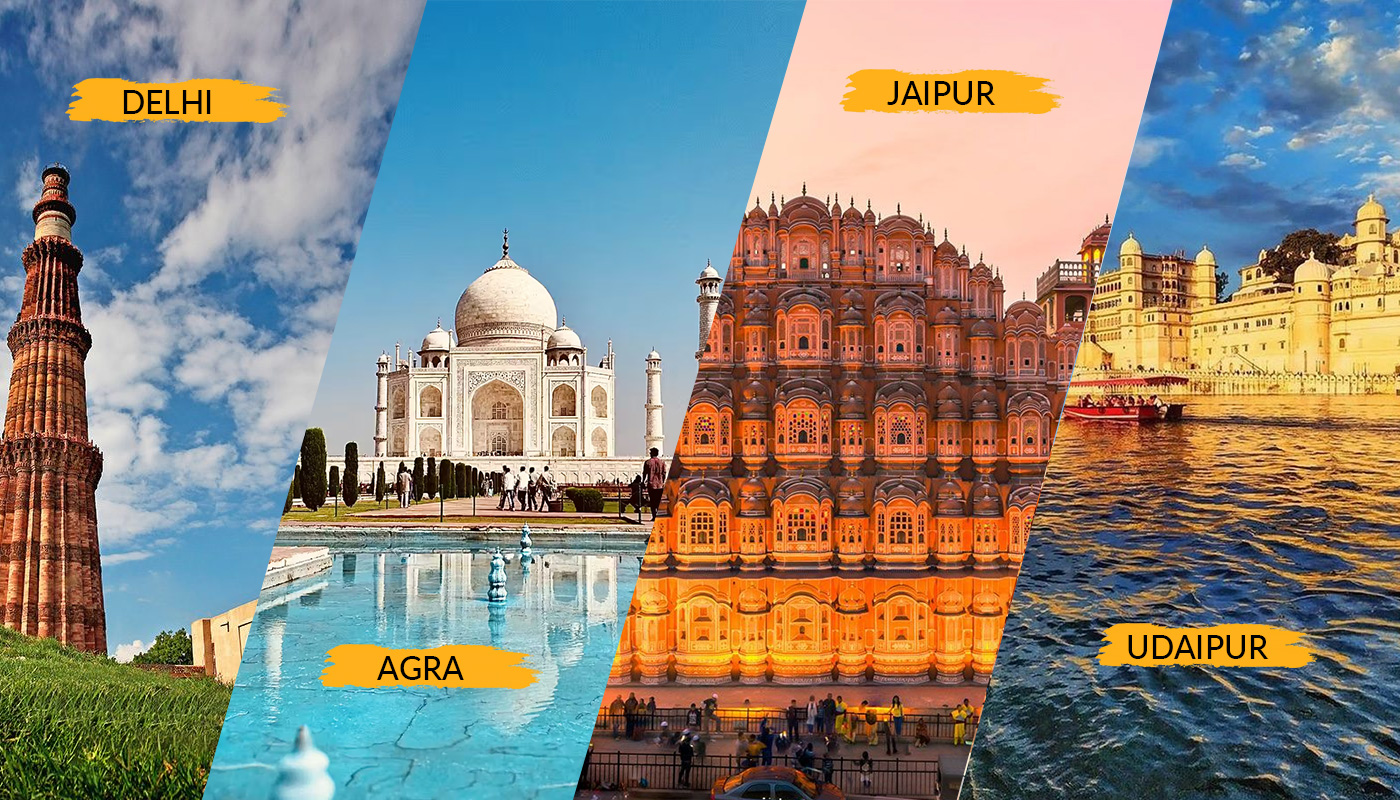
Duration: 8 Days / 7 Nights
Route:
Delhi → Agra → Jaipur → Udaipur → Delhi
Embark on an unforgettable 8-day journey through India’s Golden Triangle and the royal city of Udaipur, combining the historic charm of Delhi, the timeless beauty of the Taj Mahal in Agra, the colourful heritage of Jaipur, and the serene lakes and palaces of Udaipur. This itinerary offers a wonderful blend of history, architecture, culture, spirituality, and royal Rajasthan.
Tour Plan
Day 1 – Arrive Delhi
Arrive in Delhi, India’s vibrant capital city. After a traditional Indian welcome, you will be escorted to your hotel for a comfortable stay.
Take some time to relax and settle in before beginning your journey through India’s most fascinating historic cities.
Day 2 – Explore Delhi
Today, discover the contrasting sides of Old and New Delhi, where centuries of history meet modern city life.
Begin with Old Delhi and visit Jama Masjid, one of India’s largest mosques. Enjoy a traditional rickshaw ride through Chandni Chowk, one of the city’s oldest and busiest market areas. Drive past the historic Red Fort, an important symbol of India’s history, and visit Raj Ghat, the memorial of Mahatma Gandhi.
Later, explore New Delhi with a visit to Qutub Minar, a remarkable example of Indo-Islamic architecture. Visit Gurudwara Bangla Sahib, an important Sikh place of worship known for its peaceful atmosphere and beautiful golden dome.
Continue with a photo stop at India Gate, the iconic war memorial, and drive past Rashtrapati Bhavan, Parliament House, and the Government Secretariat buildings, showcasing the grandeur of Lutyens’ Delhi.
Day 3 – Delhi to Agra
After breakfast, drive to Agra, home to one of the world’s most celebrated monuments—the Taj Mahal.
Upon arrival, check in at your hotel and freshen up before exploring the historic Agra Fort. Built primarily in red sandstone, the fort features magnificent palaces, courtyards, audience halls, and gardens overlooking the Yamuna River.
Later, experience the breathtaking Taj Mahal, the eternal symbol of love built by Mughal Emperor Shah Jahan in memory of Mumtaz Mahal. Admire its white marble architecture and intricate craftsmanship, and, if possible, enjoy the monument during the beautiful evening light.
Day 4 – Agra to Jaipur
After breakfast, continue your journey to Jaipur, the famous Pink City and capital of Rajasthan. Founded in 1727 by Maharaja Sawai Jai Singh II, Jaipur is renowned for its planned streets, grand palaces, forts, and colourful markets.
En route, visit Fatehpur Sikri, the magnificent red sandstone city built during the Mughal era. Explore its impressive palaces, courtyards, mosque, and the shrine of Sheikh Salim Chishti, whose blessings are traditionally associated with the birth of Emperor Akbar’s son.
Continue to Jaipur and check in at your hotel.
Day 5 – Explore Jaipur
Begin the day with a visit to the magnificent Amber Fort, an impressive blend of Rajput and Mughal architecture. Located on a hill overlooking the surrounding landscape, the fort features grand courtyards, ornate halls, palaces, and beautiful artistic details.
Later, explore Jaipur’s City Palace, a fascinating complex showcasing the royal heritage of the former Jaipur rulers.
Visit Jantar Mantar, a remarkable collection of astronomical instruments built by Maharaja Sawai Jai Singh II and recognised as a UNESCO World Heritage Site.
Complete your Jaipur sightseeing with a drive past the iconic Hawa Mahal, or Palace of Winds, famous for its distinctive honeycomb-style windows and pink sandstone façade.
Day 6 – Jaipur to Udaipur
This morning, transfer to the airport for your flight to Udaipur, the enchanting City of Lakes.
Set amidst the scenic Aravalli Hills, Udaipur is known for its beautiful lakes, magnificent palaces, historic temples, and romantic atmosphere. The city was founded in the 16th century by Maharana Udai Singh II and became the historic capital of the Mewar kingdom.
Upon arrival, check in at your hotel and enjoy the rest of the day at leisure.
Take a relaxed walk through the old city, enjoy views of Lake Pichola, or simply unwind while experiencing the peaceful charm of Udaipur.
Day 7 – Explore Udaipur
Today, discover the royal heritage and cultural treasures of Udaipur.
Begin with the magnificent City Palace, one of Rajasthan’s largest palace complexes. Overlooking Lake Pichola, the palace showcases grand courtyards, royal chambers, balconies, museums, and intricate architecture reflecting the legacy of Mewar.
Visit Saheliyon-Ki-Bari, a beautiful historic garden created for the royal women of the Mewar court, known for its fountains, marble pavilions, and peaceful surroundings.
Continue to Bhartiya Lok Kala Mandal, a folklore museum dedicated to preserving the traditional folk culture of Rajasthan. Explore its collection of folk costumes, ornaments, puppets, musical instruments, and other cultural artefacts.
End your sightseeing with a visit to Jagdish Temple, a historic temple known for its impressive architecture and intricate stone carvings.
You can also spend your evening enjoying the scenic beauty of Lake Pichola, with the surrounding palaces and Aravalli Hills creating a beautiful backdrop.
Day 8 – Udaipur to Delhi – Departure
After breakfast, transfer to Udaipur Airport for your flight to Delhi.
Upon arrival in Delhi, continue your transfer to the international airport for your onward flight back home.
As your journey comes to an end, take with you unforgettable memories of India’s historic capitals, magnificent Mughal monuments, colourful Rajput heritage, royal palaces, sacred sites, and the serene beauty of Udaipur.
A Journey Through India’s Timeless Heritage
From the bustling streets of Delhi and the timeless beauty of the Taj Mahal to the royal forts of Jaipur and the tranquil lakes and palaces of Udaipur, this 8 Days / 7 Nights Golden Triangle with Udaipur tour brings together some of India’s most remarkable experiences.
Book Now and discover India through its history, architecture, royal traditions, vibrant culture, and unforgettable landscapes.
Hemis Festival & Ladakh
A Journey Through Buddhist Culture and Trans-Himalayan Landscapes
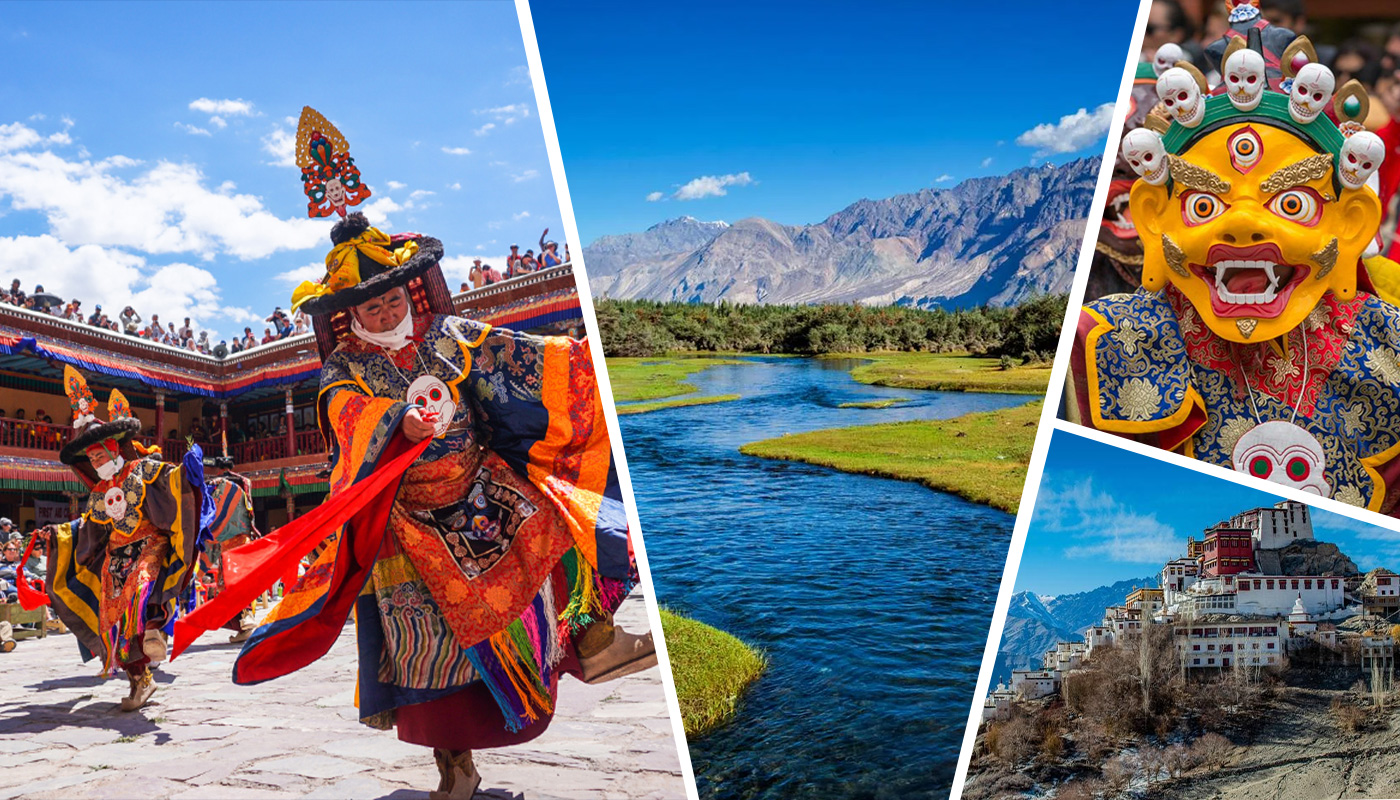
A Season of Nature, Adventure & Discovery
Hidden beyond the great Himalayan ranges, Ladakh is a land of dramatic contrasts—vast arid valleys, rugged mountains, high-altitude lakes, ancient monasteries, and patches of green farmland nourished by mountain streams. Often described as the “Land of High Passes,” Ladakh offers travellers an extraordinary combination of breathtaking landscapes, Tibetan Buddhist traditions, remote villages, and unforgettable Himalayan experiences.
At the heart of this journey is the spectacular Hemis Festival, one of Ladakh’s most celebrated Buddhist festivals. Held at the historic Hemis Monastery, the festival honours Guru Padmasambhava (Guru Rinpoche), the revered Buddhist master associated with the spread of Vajrayana Buddhism across the Himalayan region. Monks gather in colourful traditional costumes and elaborate masks to perform the sacred Cham Dance, a ritual performance symbolising the triumph of good over evil.
The sound of traditional instruments, vibrant costumes, ceremonial rituals, and the spiritual atmosphere of Hemis Monastery make the festival a fascinating cultural experience. Beyond its colourful celebrations, the festival offers visitors an opportunity to witness a living Buddhist tradition that has been preserved through generations.
A Journey Through Leh & Ladakh
The journey begins in Delhi, followed by a flight to Leh, the gateway to Ladakh. Surrounded by dramatic mountains and located at a high altitude, Leh offers the perfect introduction to the region’s unique landscape and Buddhist heritage.
Explore the monasteries and scenic surroundings of Thiksey, Matho, and Stok, followed by a visit to Shanti Stupa, which offers panoramic views across Leh and the surrounding mountains.
The following day brings the highlight of the journey—the Hemis Festival. Travel from Leh to Hemis Monastery to experience the colourful celebrations, sacred Cham dances, traditional music, elaborate masks, and vibrant atmosphere before returning to Leh.
From Leh, continue towards Ule, visiting the historic monasteries of Alchi and Likir along the way. Alchi is particularly renowned for its ancient Buddhist art, murals, and sculptures.
The journey then continues through the spectacular landscapes of Lamayuru, one of Ladakh’s most scenic regions, before visiting Rizdong Monastery and returning to Leh.
Into the Nubra Valley
One of the most memorable parts of the journey takes you across Khardung La, one of the high mountain passes traditionally associated with the route into the Nubra Valley.
Continue towards Diskit Monastery, perched dramatically above the valley, before exploring the unique Hunder Sand Dunes. Here, the stark Himalayan landscape meets desert-like dunes, creating one of Ladakh’s most unusual and photogenic settings.
The next day offers a deeper exploration of Nubra Valley with visits to Yarab Tso Lake, Panamik Hot Springs, and Sumoor Monastery. The combination of rugged mountains, peaceful villages, monasteries, and natural hot springs provides a fascinating glimpse into life in this remote Himalayan region.
OUTLINE PROGRAM
12 JUL – ARRIVE DELHI
Arrive in Delhi by international flight. Afternoon city tour of Delhi.
13 JUL – DELHI → LEH
Fly from Delhi to Leh by domestic flight.
14 JUL – THIKSEY → MATHO → STOK → SHANTI STUPA
Explore monasteries, royal heritage, and panoramic views around Leh.
15 JUL – LEH → HEMIS → LEH
Visit Hemis Monastery and experience the spectacular Hemis Festival, including traditional Cham dances and Buddhist rituals.
16 JUL – LEH → ULE VIA ALCHI & LIKIR
Travel by road to Ule, visiting the historic monasteries of Alchi and Likir en route.
17 JUL – ULE → LAMAYURU → RIZDONG → LEH
Explore the dramatic landscapes of Lamayuru and visit Rizdong Monastery before returning to Leh.
18 JUL – LEH → KHARDUNG LA → DISKIT → HUNDER → NUBRA
Cross the high mountain pass of Khardung La and continue to Diskit Monastery and the Hunder Sand Dunes.
19 JUL – EXPLORE NUBRA VALLEY
Visit Yarab Tso Lake, Panamik Hot Springs, and Sumoor Monastery.
20 JUL – NUBRA → LEH
Return to Leh by road, enjoying the spectacular Himalayan scenery along the way.
21 JUL – LEH → DELHI → DEPARTURE
Fly from Leh to Delhi and connect with your international flight home.
Experience the Spirit of Ladakh
From ancient monasteries and sacred Buddhist rituals to high mountain passes, turquoise lakes, desert-like valleys, and spectacular Himalayan landscapes, this journey offers a remarkable introduction to Ladakh.
The Hemis Festival adds a unique cultural dimension, allowing travellers to witness centuries-old Buddhist traditions against the extraordinary backdrop of the Himalayas.
Ladakh is more than a destination—it is a journey into vast landscapes, living traditions, spiritual heritage, and the timeless beauty of the Trans-Himalayan world.